Clear, patient-centered information so you can feel informed, prepared, and confident asking questions during your consultation.
EXPRESSION + BALANCE
Botox® / Neuromodulator
WHAT IT IS
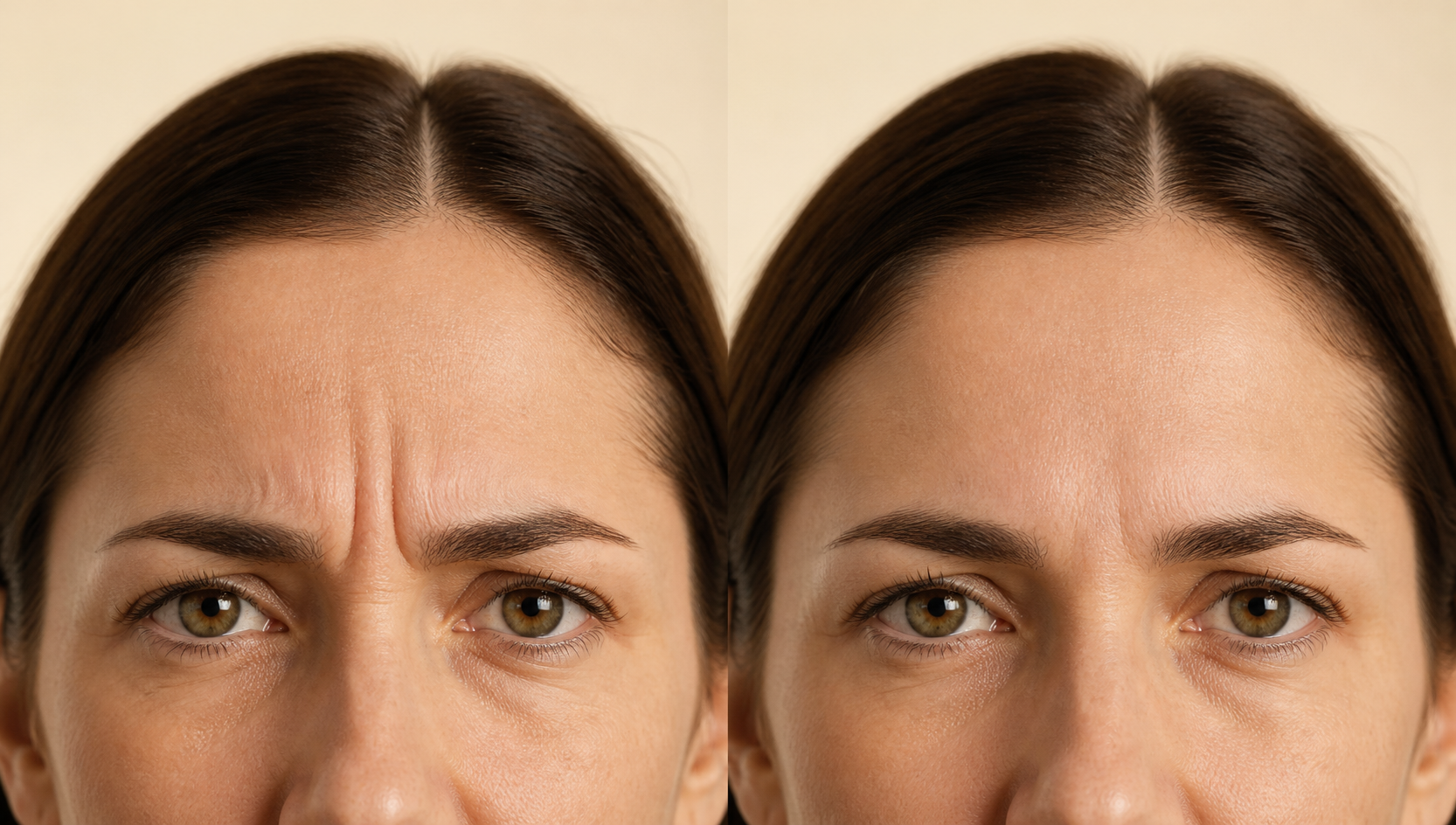
Botox is best known for softening expression lines—the creases that appear when you frown, squint, smile, or raise your brows. In small, carefully placed doses, it can also be used to balance selected facial and neck muscles while keeping the result natural and expressive.
Untreated viewIllustrative refinement
Treatment focus · Softer expression lines with natural-looking movementIllustrative treatment visualization—not an actual patient result. It is not a promise or prediction of outcome.
Untreated viewIllustrative refinement
Treatment focus · A softer gummy smile with less upper-gum displayIllustrative treatment visualization—not an actual patient result. It is not a promise or prediction of outcome.
Lower-face + neck concernIllustrative refinement
Treatment focus · Softening lower-face and neck muscle pull while preserving natural expressionIllustrative treatment visualization—not an actual patient result. Botox does not create filler-like volume or a surgical neck lift.
TREATMENT FOCUS
What it is used to treat
Forehead lines, frown lines between the brows, and crow’s feet
A gummy smile, lip flip, chin dimpling, or downward pull at the corners of the mouth
A prominent or tense masseter muscle at the jaw
Platysmal bands and selected neck concerns
CANDIDACY
Who may be a good candidate
A good candidate is generally a healthy adult with lines or concerns caused by muscle movement who wants a temporary, customized result. The safest dose and placement depend on facial anatomy, muscle strength, movement, and treatment goals.
WHY IT WORKS
How the treatment creates change
Think of an expression line as a crease formed by folding the same area of skin again and again. Botox temporarily turns down the signal between a nerve and the selected muscle, so that muscle cannot pull as strongly. With less repeated folding, the skin above it can look smoother. Botox does not fill the line, change the skin itself, or permanently stop movement; its effect gradually wears off.
YOUR APPOINTMENT + RESULTS
What to expect
Your provider first watches how your face moves and marks a personalized treatment pattern.
The treatment uses several small injections and is usually completed quickly.
Changes begin gradually. The result is commonly evaluated at two weeks and often lasts about three to four months.
BEFORE TREATMENT
When treatment may not be right
Treatment may need to be postponed or avoided with pregnancy or breastfeeding, infection at a planned injection site, certain neuromuscular conditions, or a relevant allergy. Share all medications, supplements, prior toxin treatments, facial surgery, and swallowing or breathing concerns.
KNOW BEFORE YOU CHOOSE
Risks and limitations
Temporary tenderness, bruising, headache, uneven results, unwanted muscle weakness, dry eye, or a lowered brow or eyelid can occur. Results are temporary and may not fully correct every line. Rare symptoms involving swallowing, speaking, breathing, or widespread weakness require immediate medical attention.
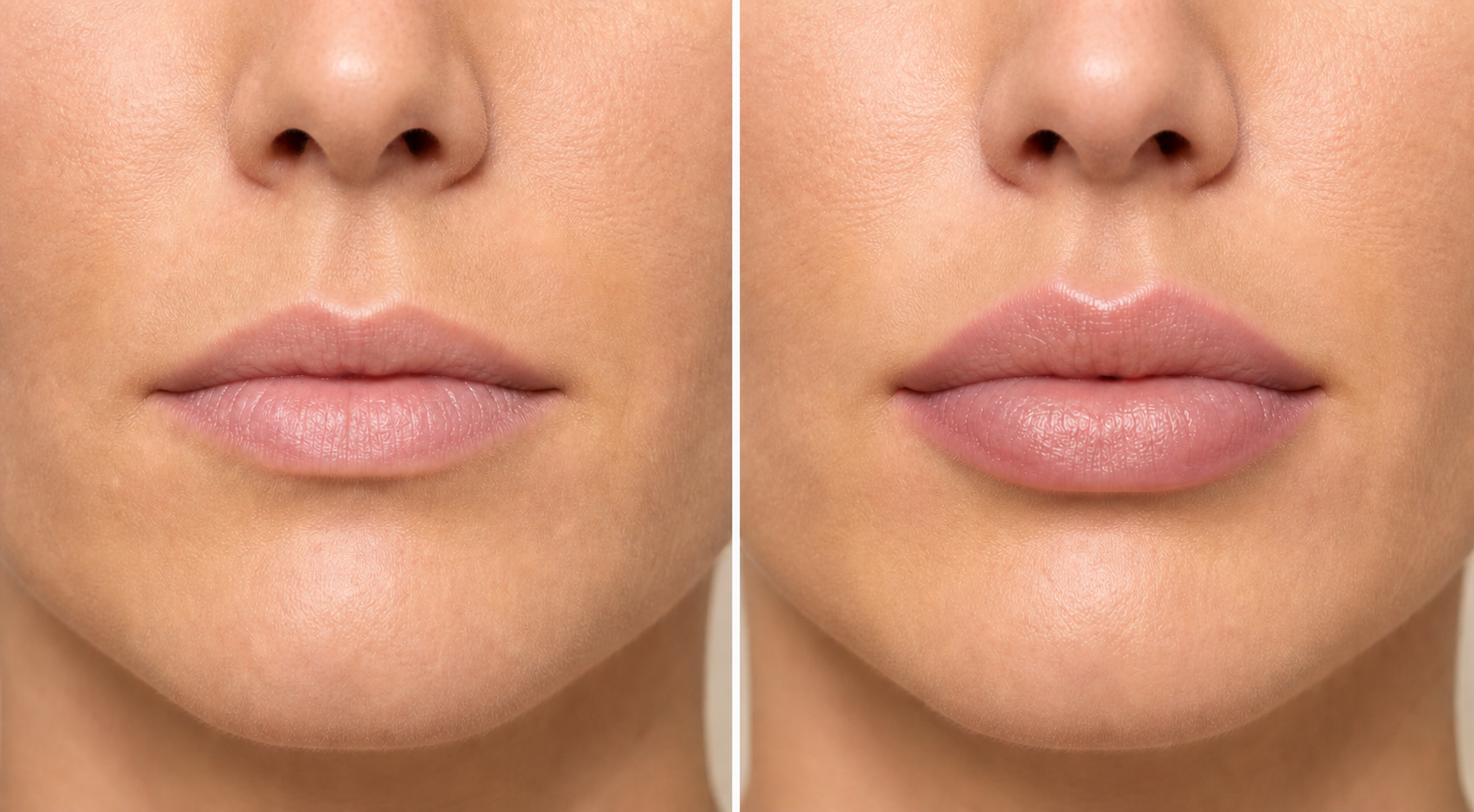
Hyaluronic-acid filler is a soft gel placed beneath the skin to shape, support, or restore volume. It can enhance the lips, balance facial proportions, define selected contours, or soften folds without changing the features that make you look like you.
Untreated viewIllustrative refinement
Treatment focus · Balanced lips, cheek support, chin proportion, and jawline definitionIllustrative treatment visualization—not an actual patient result. It is not a promise or prediction of outcome.
Untreated viewIllustrative refinement
Treatment focus · Refined lip volume, shape, definition, and proportionIllustrative treatment visualization—not an actual patient result. It is not a promise or prediction of outcome.
TREATMENT FOCUS
What it is used to treat
Lip shape, volume, hydration, and proportion
Cheek support and facial contour
Chin projection and jawline definition
Selected folds, lines, and areas of volume loss
CANDIDACY
Who may be a good candidate
A good candidate is generally an adult age 21 or older who wants a thoughtful change in shape or volume, understands that results are temporary, and is medically appropriate for the selected product and area.
WHY IT WORKS
How the treatment creates change
Hyaluronic-acid filler works by placing a smooth gel beneath the skin where volume or support is needed. The gel physically shapes, cushions, or lifts the treated area and attracts water, which can help create a softer, more hydrated appearance. Because some gels are softer and more flexible while others are firmer and more supportive, the product is matched to the area being treated.
YOUR APPOINTMENT + RESULTS
What to expect
A consultation determines the treatment area, filler type, estimated amount, and whether treatment should be completed in stages.
Swelling, tenderness, firmness, redness, and bruising are common at first. Lip swelling can be more noticeable.
Results are visible immediately but settle as swelling improves. How long filler lasts depends on the product, placement, movement, metabolism, and amount used.
BEFORE TREATMENT
When treatment may not be right
Treatment may not be appropriate with active infection or inflammation, certain severe allergies, bleeding concerns, pregnancy or breastfeeding, or allergy to product ingredients such as lidocaine. Recent or planned dental work, illness, vaccination, cold sores, and prior filler should be discussed.
KNOW BEFORE YOU CHOOSE
Risks and limitations
Swelling, bruising, tenderness, firmness, unevenness, lumps, infection, or an unwanted result can occur. Rarely, filler can enter or block a blood vessel and cause skin damage, vision loss, stroke, or other permanent harm. Increasing pain, pale or blotchy gray-blue skin, vision changes, facial weakness, confusion, or trouble speaking requires immediate action.
Sculptra is a collagen-stimulating injectable for patients who want gradual, understated rejuvenation. Instead of placing a gel to create immediate shape, it encourages the skin to rebuild some of its own structural support over time.
Untreated viewIllustrative refinement
Treatment focus · Gradual collagen support and facial contour refinementIllustrative treatment visualization—not an actual patient result. It is not a promise or prediction of outcome.
Volume-loss concernIllustrative refinement
Treatment focus · Gradual support for age-related volume loss on the backs of the handsIllustrative treatment visualization—not an actual patient result. Sculptra use in the hands is outside FDA-approved labeling.
TREATMENT FOCUS
What it is used to treat
Widespread facial volume loss and gradual support of facial contours
Fine lines and selected facial areas that may benefit from additional collagen support
Age-related volume loss and visible tendons or veins on the backs of the hands
Selected buttock contour, symmetry, skin-quality, or gradual volume goals
Longer-term rejuvenation plans completed in stages
CANDIDACY
Who may be a good candidate
A good candidate is generally a healthy adult seeking gradual, natural-looking change who is comfortable waiting for results and may need more than one vial or treatment session.
WHY IT WORKS
How the treatment creates change
Sculptra does not work like a traditional filler. It places tiny biocompatible particles beneath the skin that encourage the body to gradually build more of its own collagen around the treatment area. The water mixed with the product creates temporary fullness at first, then fades. The collagen-related change develops slowly over the following weeks and months.
YOUR APPOINTMENT + RESULTS
What to expect
The water mixed with Sculptra creates temporary fullness immediately after treatment. That fullness fades as the water is absorbed.
Collagen-related improvement develops gradually over several weeks to months.
Most plans are staged. The number of vials and visits depends on anatomy, existing volume loss, age, and goals.
BEFORE TREATMENT
When treatment may not be right
Sculptra should not be used in people with severe allergies or a history of multiple severe allergies and may be inappropriate with active infection, certain immune or bleeding concerns, pregnancy or breastfeeding, or a tendency toward problematic scarring. Prior procedures and medications must be reviewed.
KNOW BEFORE YOU CHOOSE
Risks and limitations
Swelling, tenderness, redness, bruising, and temporary lumps can occur. Small firm lumps may also appear weeks or months later. Other risks include infection, unevenness, blood-vessel injury, or an unwanted result. Unlike hyaluronic-acid filler, Sculptra cannot be dissolved with hyaluronidase.
PDO threads are fine, absorbable sutures placed beneath the skin for added support. Smooth threads and lifting COG threads serve different purposes: smooth threads are used in planned patterns within the tissue, while COG threads can gently reposition selected areas.
Untreated viewIllustrative refinement
Treatment focus · Subtle lower-face and neck support for selected candidatesIllustrative treatment visualization—not an actual patient result. It is not a promise or prediction of outcome.
TREATMENT FOCUS
What it is used to treat
Mild lower-face or neck laxity in carefully selected patients
Selected jawline or facial contour concerns
Smooth-thread treatment plans for the face, neck, or body
Patients seeking a nonsurgical improvement who understand its limits
CANDIDACY
Who may be a good candidate
A good candidate generally has mild to moderate laxity, skin and tissue that can be supported safely, and realistic expectations. Heavy tissue or more advanced laxity may not respond well, and threads are not a replacement for surgery.
WHY IT WORKS
How the treatment creates change
PDO threads work in two different ways depending on the thread selected. COG threads have tiny barbs that hold and reposition selected tissue for immediate mechanical support. Smooth threads do not lift in the same way; they are placed in planned patterns to create support within the tissue. As either type slowly dissolves, the body forms healing tissue and collagen along the thread pathway. Results depend heavily on anatomy, skin quality, and the amount of tissue being supported.
YOUR APPOINTMENT + RESULTS
What to expect
An in-person assessment determines whether smooth or COG threads are appropriate and how many are needed.
Tenderness, swelling, bruising, tightness, dimpling, and temporary asymmetry can occur while the tissue settles.
COG-thread treatment and recovery are more involved than smooth threads. Results and how long they last vary considerably.
BEFORE TREATMENT
When treatment may not be right
Treatment may be deferred with pregnancy or breastfeeding, active infection, certain bleeding or immune conditions, impaired healing, unrealistic expectations, or medications and supplements that increase procedural risk. Dental timing and recent procedures should be reviewed for face and neck treatments.
KNOW BEFORE YOU CHOOSE
Risks and limitations
Possible complications include prolonged pain, visible or palpable threads, puckering, asymmetry, infection, migration, extrusion, scarring, nerve or vessel injury, and the need for adjustment or removal. A face-compression garment may be included for selected lifting-thread plans.
PRP and PRF are regenerative treatments prepared from a small sample of your own blood. The sample is processed in a centrifuge, which separates the blood components by density. The platelet-rich plasma—or platelet-rich fibrin—is then collected and injected into selected areas. These concentrated platelets release growth factors and signaling proteins that support the body’s normal repair response and gradual collagen remodeling. The goal is to improve skin quality over time, not create filler-like volume.
Untreated viewIllustrative refinement
Treatment focus · Gradual support for skin quality and under-eye appearanceIllustrative treatment visualization—not an actual patient result. It is not a promise or prediction of outcome.
Skin-quality concernIllustrative refinement
Treatment focus · Gradual improvement in lower-face and neck texture, fine lines, and skin qualityIllustrative treatment visualization—not an actual patient result. PRP and PRF do not create filler-like volume or a surgical lift.
TREATMENT FOCUS
What it is used to treat
Crepey or thin-looking under-eye skin in selected patients
Some under-eye darkness caused by thin skin, visible underlying vessels, or skin-quality changes
Overall skin quality, texture, and facial rejuvenation goals
Face-and-neck treatment plans focused on gradual improvement
CANDIDACY
Who may be a good candidate
A good candidate is generally a healthy adult who can safely have blood drawn and whose blood counts, skin condition, health history, and expectations support treatment. For dark circles, candidacy depends on the cause: PRP or PRF may help when thin skin contributes to the darkness, but it is not intended to remove melanin-based brown pigmentation. Results are gradual and variable.
WHY IT WORKS
How the treatment creates change
PRP and PRF use a concentrated portion of your own blood to deliver platelets and their natural signaling proteins back into a treatment area. Those signals help coordinate normal healing and may encourage collagen-related remodeling and gradual improvement in skin quality. Under the eyes, thicker or healthier-looking skin may make darkness caused by thin, translucent skin or visible underlying vessels appear less noticeable. It does not remove brown pigment caused by melanin. PRF also forms a soft fibrin mesh that temporarily holds platelets in place. Neither treatment fills or shapes the face like dermal filler, and results develop gradually rather than immediately.
PlasmaThe liquid portion of blood that carries proteins, nutrients, electrolytes, and signaling molecules.
PlateletsSmall blood components whose granules release growth factors and other signaling proteins after activation.
FibrinA natural protein mesh that is more prominent in PRF and creates a temporary scaffold as the sample clots.
White blood cellsThe amount varies by collection system and protocol; they may influence inflammatory and healing signals.
Important distinction: PRP is a platelet-rich liquid, while PRF forms a soft fibrin matrix that can hold platelets in the treatment area. The preparation used depends on the area being treated and your individualized plan.
YOUR APPOINTMENT + RESULTS
What to expect
Blood is drawn, separated in a centrifuge, and prepared for injection during the same appointment.
The product is injected into the planned areas. Bruising, swelling, tenderness, and small injection marks are expected possibilities.
A treatment series may be recommended. Improvement develops gradually, and maintenance depends on response and goals.
BEFORE TREATMENT
When treatment may not be right
PRP may not be appropriate with active infection, certain blood or platelet disorders, significant anemia, some cancers or systemic illnesses, pregnancy or breastfeeding, or medications that affect clotting or platelet function. Do not stop prescribed medication unless the prescribing clinician directs you to do so.
KNOW BEFORE YOU CHOOSE
Risks and limitations
Because PRP or PRF is prepared from your own blood, an allergic reaction to the plasma itself is not expected. Blood-draw and injection risks still remain, including bruising, bleeding, infection, pain, swelling, nerve or tissue injury, feeling faint, and an incomplete or unsatisfactory response.
PRP hair restoration begins with a small sample of your own blood. The sample is processed in a centrifuge to separate its components by density, and the platelet-rich plasma is collected and injected into selected areas of the scalp. The concentrated platelets release growth factors and signaling proteins that may support follicles that are still active. PRP cannot create new follicles or treat every cause of hair loss.
Untreated viewIllustrative refinement
Treatment focus · A narrower-looking part and improved coverage in areas of diffuse thinningIllustrative treatment visualization—not an actual patient result. It is not a promise or prediction of outcome.
Untreated viewIllustrative refinement
Treatment focus · Improving the appearance of thinning while preserving a natural, mature hairlineIllustrative treatment visualization—not an actual patient result. It is not a promise or prediction of outcome.
TREATMENT FOCUS
What it is used to treat
Selected cases of pattern hair thinning
Reduced visible density where follicles remain active
Support for strand thickness or the active growth phase in some patients
A broader hair-loss plan that may also include medical evaluation or other therapies
CANDIDACY
Who may be a good candidate
A good candidate generally has a type of thinning that may respond to PRP, still has active hair follicles, and can safely have blood drawn and scalp injections. The cause of hair loss should be considered because not every type responds to PRP.
WHY IT WORKS
How the treatment creates change
PRP is injected around existing hair follicles to place concentrated platelets and their natural signaling proteins where growth support is needed. These signals may improve the environment around active follicles, support blood-vessel signaling, and help some follicles enter or remain in the active growth phase longer. This may improve visible density or strand thickness for some patients. PRP cannot create new follicles, and it is less likely to help where follicles are scarred or no longer active.
PlasmaCarries the platelets and naturally occurring blood proteins into the planned scalp area.
PlateletsRelease signaling proteins that may influence follicle cells, local blood-vessel signaling, and the hair-growth cycle.
Individual biologyPlatelet concentration, diagnosis, follicle viability, medications, nutrition, hormones, and protocol all affect response.
Important distinction: The cause of hair loss matters. PRP may help selected cases of pattern thinning, but hair loss caused by scarring, inflammation, illness, medication, hormones, or nutritional concerns may need different care. PRP is not a substitute for identifying the cause.
YOUR APPOINTMENT + RESULTS
What to expect
Blood is drawn, separated in a centrifuge, and the platelet-rich portion is injected throughout the planned scalp area.
Temporary tenderness, pressure, redness, pinpoint bleeding, swelling, or headache may occur.
Treatment usually begins with a series followed by maintenance. Visible change takes months and varies according to the diagnosis and individual response.
BEFORE TREATMENT
When treatment may not be right
PRP may not be appropriate with active scalp infection, certain blood or platelet disorders, significant anemia, some cancers or systemic illnesses, pregnancy or breastfeeding, or medications that affect clotting or platelet function. Additional medical evaluation may be recommended before treatment.
KNOW BEFORE YOU CHOOSE
Risks and limitations
Risks include pain, bleeding, bruising, infection, swelling, headache, feeling faint, temporary shedding, nerve or tissue injury, and little or no meaningful improvement. PRP cannot create new follicles and is not a permanent cure for hair loss.