What does “lower-face tox” mean?
“Tox” is shorthand for a botulinum toxin neuromodulator, such as Botox Cosmetic or Jeuveau. These prescription medications temporarily reduce activity in selected muscles. Lower-face treatment considers how that movement contributes to the appearance of the mouth, chin, or neck.
A line or shadow can have more than one cause. Skin texture, tissue support, volume changes, and facial movement may all play a part. The first step is deciding which of those factors actually explains what you see.
Downturned mouth corners: understanding the DAO
The depressor anguli oris, often called the DAO, helps pull the mouth corners downward. When that pull contributes to a concern, carefully selected neuromodulator treatment may soften it.
This does not fill a marionette fold or replace lost support. If a mouth corner looks downturned mainly because of tissue changes, relaxing a muscle may have limited benefit. Nearby muscles also control the lower lip and smile, making a careful movement assessment essential.
Chin dimpling: assessing the mentalis
The mentalis contributes to lower-lip movement and can create a pebbled or dimpled chin when it contracts. Treatment may soften this movement-related texture in appropriate candidates.
A dimpled chin does not automatically need treatment. The assessment should consider whether the muscle is helping the lips close comfortably. Weakening it can affect lip function or smile balance. Tox also does not create the structural projection that a filler or surgical discussion might address.
Lip flip: a change in movement, rather than added volume
A lip flip aims to change how the upper lip rests or rolls inward by relaxing selected activity around the mouth. The visible effect is usually subtle and varies with anatomy.
It does not add filler volume or predictably create a particular lip shape. Because the same muscles help with lip closure, treatment can make sipping, using a straw, pronouncing certain sounds, or keeping liquids in the mouth more difficult. Your daily activities and tolerance for those possibilities belong in the decision.
Jawline and neck: realistic expectations
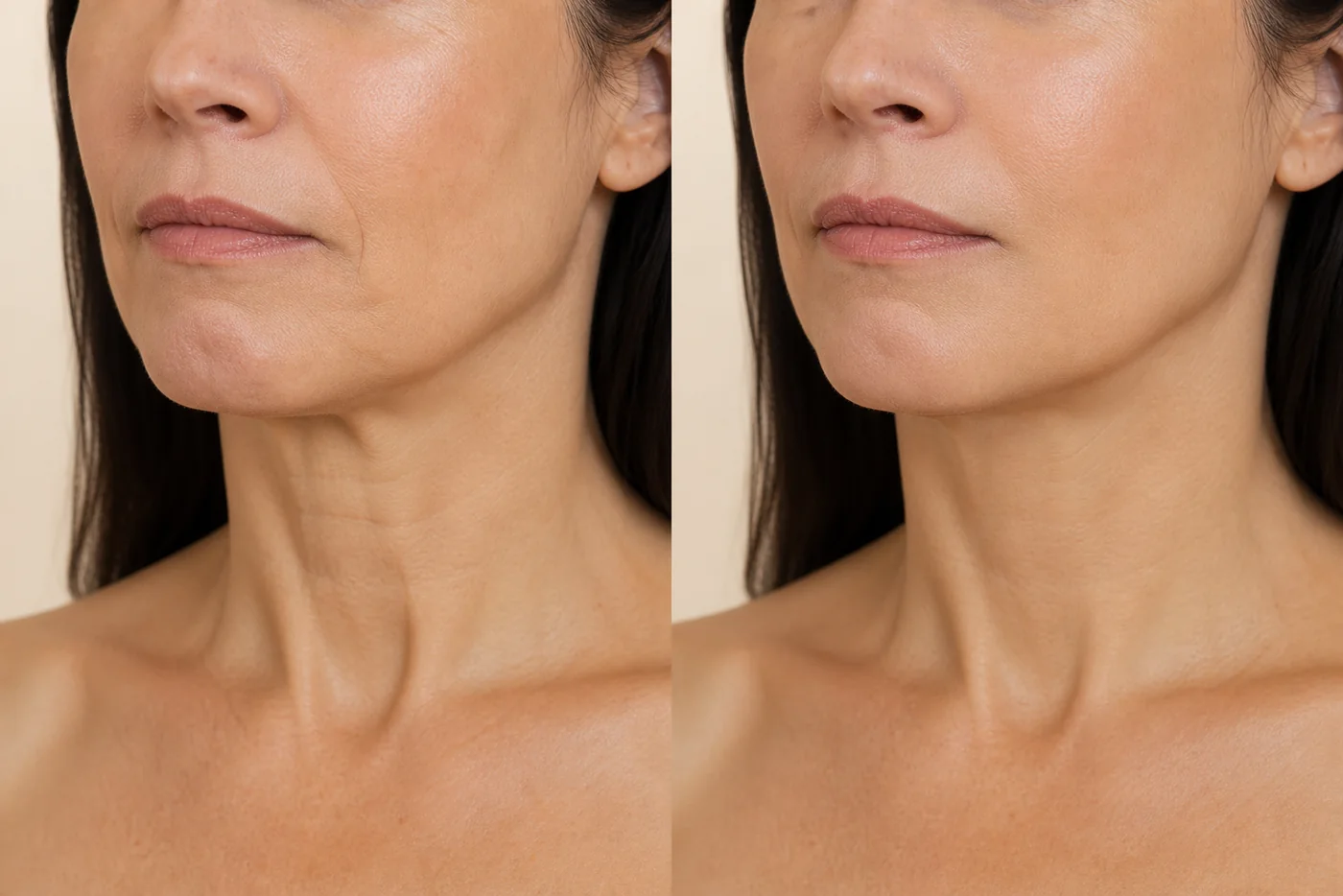
The platysma is a broad, thin muscle spanning the neck and extending into the lower face. Its contraction can produce visible vertical neck bands and influence the appearance along the jaw.
Botox Cosmetic is FDA approved to temporarily improve moderate-to-severe platysma bands in adults. That approval does not mean every treatment marketed as jawline slimming or a “Nefertiti lift” is an approved use. Jeuveau is approved for glabellar frown lines, so its lower-face and neck uses are off-label.
Reducing muscle pull cannot remove excess skin or fat, rebuild lost volume, or produce a surgical lift. An assessment may point toward a different approach—or no injectable treatment.
Why product and treatment area matter
DAO treatment, mentalis treatment, and lip flip are outside FDA-approved labeling for Botox Cosmetic and Jeuveau. Off-label use means a medication is being used beyond its approved indication; it requires an individualized discussion of the evidence, limitations, risks, and alternatives.
Botox Cosmetic and Jeuveau are distinct products. Their potency units are not interchangeable, and one product’s approval or study result should not be assumed to apply to the other.
What I assess before making a recommendation
At LUVION, the conversation starts with what bothers you and how much change you want. I look at the lower face at rest and during movement, including your smile, lip closure, chin activity, and symmetry.
Your health history, medications, prior treatment response, and any difficulty speaking, swallowing, or breathing can change whether treatment is appropriate. The plan should respect the features and expressions that already make you recognizable.
A consultation is also a place to discuss what we should leave alone. Sometimes a smaller plan, a staged approach, or a different treatment is the more appropriate choice.
Risks and follow-up deserve a clear conversation
Bruising, tenderness, swelling, and an unwanted cosmetic result can occur. Lower-face treatment can cause asymmetry, an altered smile, lip weakness, or difficulty with normal mouth movements. Effects are temporary, but there is no immediate reversal that reliably switches a neuromodulator off.
Botulinum toxin products carry a boxed warning about effects spreading beyond the injection area. New trouble swallowing, speaking, or breathing requires immediate medical attention. Symptoms can occur hours to weeks after treatment.
Follow your treatment-specific aftercare and contact your provider about unexpected changes. A planned follow-up helps assess your response; additional product is a clinical decision, not an automatic step.
Start with the concern, then choose the treatment
If you are curious about lower-face tox, bring the concern to your consultation rather than choosing a muscle or product in advance. We can discuss what movement is contributing, what treatment might change, and whether the trade-offs fit your goals.
LUVION Wellness & Aesthetics is located inside Modern Beauty Bar at 267 W Duval Road in Green Valley, Arizona. Consultations are available by appointment.