
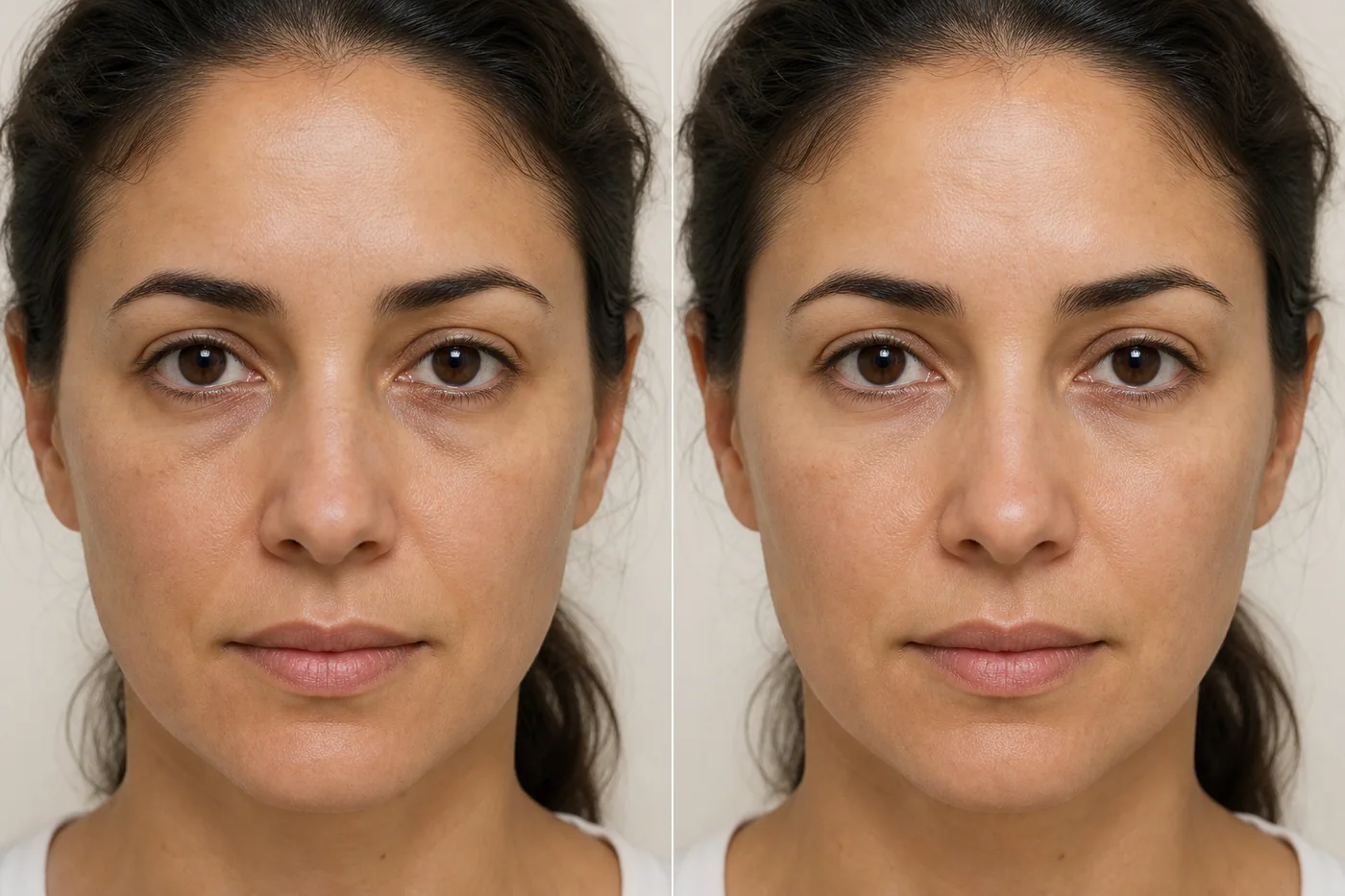
What PRP and PRF have in common
Both treatments start with a blood draw. A centrifuge separates the sample into components so a platelet-containing portion can be collected and used during treatment. Because the preparation comes from the patient, it is described as autologous.
Platelets contain signaling proteins involved in normal healing and tissue repair. In aesthetic practice, platelet preparations are used with the goal of supporting gradual changes in skin quality, texture, elasticity, and selected under-eye concerns. They do not replace lost structure in the same way as hyaluronic-acid filler.
How PRP and PRF differ
PRP generally refers to platelet-rich plasma—a plasma layer prepared to contain a higher concentration of platelets than whole blood. PRF uses a preparation approach intended to retain platelets within a fibrin-rich matrix. Injectable PRF is handled within a shorter working window because clotting is part of the intended process.
Centrifuge settings, collection tubes, anticoagulants, leukocyte content, platelet concentration, and preparation time vary among systems. Those differences make it difficult to treat PRP and PRF as one standardized medication or to assume results from one protocol apply to every other protocol.
What the evidence suggests—and what it does not prove
Recent systematic reviews describe possible improvement in parameters such as skin thickness, elasticity, texture, and patient satisfaction, but the research includes small studies, varied preparation methods, mixed treatment techniques, and inconsistent outcome measures.
That means PRP and PRF should be presented as options with evolving evidence—not as guaranteed collagen replacement, permanent rejuvenation, or a proven substitute for filler, surgery, or other medical treatment.
How treatment is selected
The choice between PRP, PRF, or another treatment begins with the concern. Under-eye skin quality, crepiness, pigmentation, hollowing, facial volume loss, and neck laxity are different problems. A platelet preparation may be reasonable for one goal while filler, biostimulation, skin treatment, surgery, or no treatment may be more appropriate for another.
- Area and depth of the concern
- Skin quality versus true structural volume loss
- Medical history, medications, platelet function, and healing history
- Tolerance for swelling, bruising, a series of visits, and gradual change
- The preparation system and protocol being used
What to expect
Common short-term effects can include tenderness, redness, swelling, bruising, and pinpoint bleeding. Because injections break the skin, infection and injury to nearby structures are possible. The under-eye region is anatomically delicate and may swell more noticeably.
Improvement, when it occurs, is gradual. A series may be recommended, followed by reassessment or maintenance based on response. Individual results vary and some patients may see limited change.