
PDO describes the material—not one universal treatment
Polydioxanone, or PDO, is an absorbable material used in surgical sutures. In aesthetic practice, PDO threads come in different designs, sizes, lengths, and delivery systems. A smooth monofilament and a barbed lifting thread may share the same base material while serving very different purposes.
Regulatory status is product- and indication-specific. Some PDO sutures are cleared for soft-tissue approximation, while particular barbed systems may have a more specific clearance. Clearance for one device or indication is not a blanket authorization for every thread, body area, technique, or marketing claim. LUVION reviews the labeling and protocol for the exact product being considered.
Smooth threads: support without a mechanical lift
Smooth threads do not have the anchoring barbs used to reposition tissue. They are placed in planned patterns for targeted skin-support goals on selected areas of the face, neck, or body. The intended change is gradual and should be described as subtle—not as an instant lift or a substitute for filler, energy-based treatment, or surgery.
Because protocols, devices, and treatment areas vary, the evidence does not support promising a standard amount of tightening or a guaranteed duration. A series may be discussed, but the number and spacing of treatments should follow the specific product, anatomy, and clinical protocol rather than a generic package.
Cog threads: temporary tissue repositioning
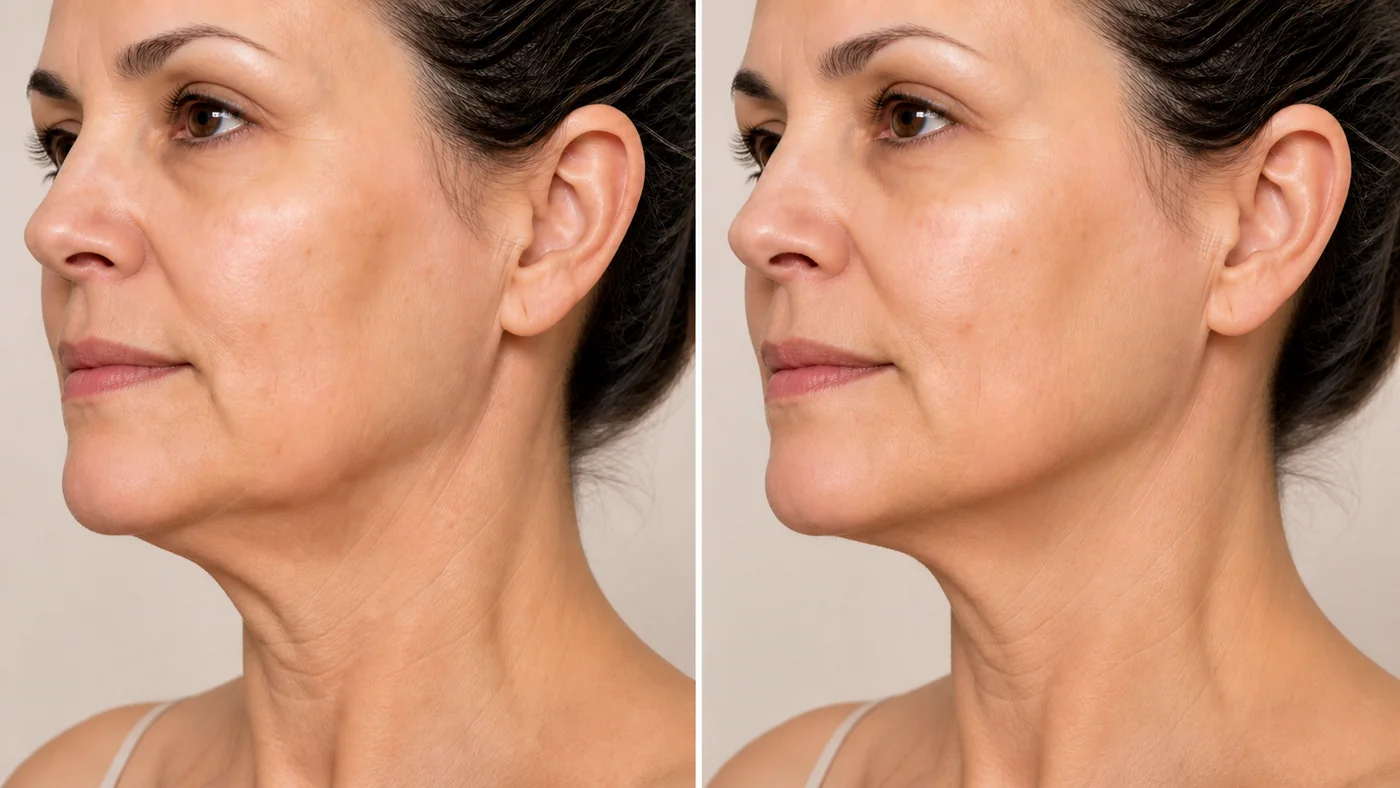
Cog or barbed threads are designed to engage tissue along a planned vector. They can create an immediate repositioning effect in carefully selected patients with mild-to-moderate laxity. The result is temporary and is not equivalent to removing excess skin or surgically repositioning deeper structures.
The most refined result usually comes from conservative vector planning, realistic tissue demands, and appropriate patient selection. More threads do not automatically create a better or longer-lasting lift. A randomized study found that using more PDO threads did not significantly improve sustained tissue displacement or satisfaction, reinforcing that planning matters more than quantity alone.
Face, neck, and body plans are not interchangeable
Tissue thickness, movement, vascular and nerve anatomy, fat distribution, and the direction of laxity differ by treatment area. A smooth-thread pattern used for abdominal skin support is not a template for the face, and a lower-face lifting vector is not automatically appropriate for the neck.
At consultation, LUVION evaluates the concern, the tissue that would need to change, prior procedures, scarring, asymmetry, medical history, and whether threads are the most proportionate option. In some cases, another treatment—or no treatment—will better match the goal.
What recovery and results may look like
Bruising, swelling, tenderness, tightness, temporary dimpling, asymmetry, and awareness of the thread can occur. Barbed threads may create an immediate lift that softens as swelling resolves and tissue settles. Smooth-thread changes, when they occur, are gradual rather than immediately visible.
Aftercare depends on the treatment area and thread system. Instructions may include limiting pressure, massage, strenuous activity, exaggerated facial movement, or certain sleeping positions for a defined period. These directions are individualized; online aftercare from another product or procedure should not replace the instructions given for your treatment.
The risk conversation matters
Published reviews describe swelling, bruising, pain, dimpling, asymmetry, numbness or altered sensation, palpable or visible threads, infection, inflammation, extrusion, and migration. Less common but more serious complications can include injury to nerves, vessels, glands, or nearby structures. Persistent contour irregularity or infection may require medication, thread removal, or another procedure.
Contact your provider promptly for increasing pain, warmth, spreading redness, drainage, fever, a visible or protruding thread, new weakness or numbness, or a rapidly worsening asymmetry. Emergency symptoms—including trouble breathing, vision change, or signs of stroke—require immediate emergency care.
A consultation should answer whether threads fit the goal
The right question is not simply whether PDO threads work. It is whether a specific thread, in a specific plane and vector, can create a meaningful change for your anatomy without asking the treatment to do more than it reasonably can.
A responsible plan explains the device, intended effect, regulatory status, alternatives, expected duration, aftercare, and what would happen if a complication occurs. That conversation is part of the treatment—not an extra step after the decision has already been made.