
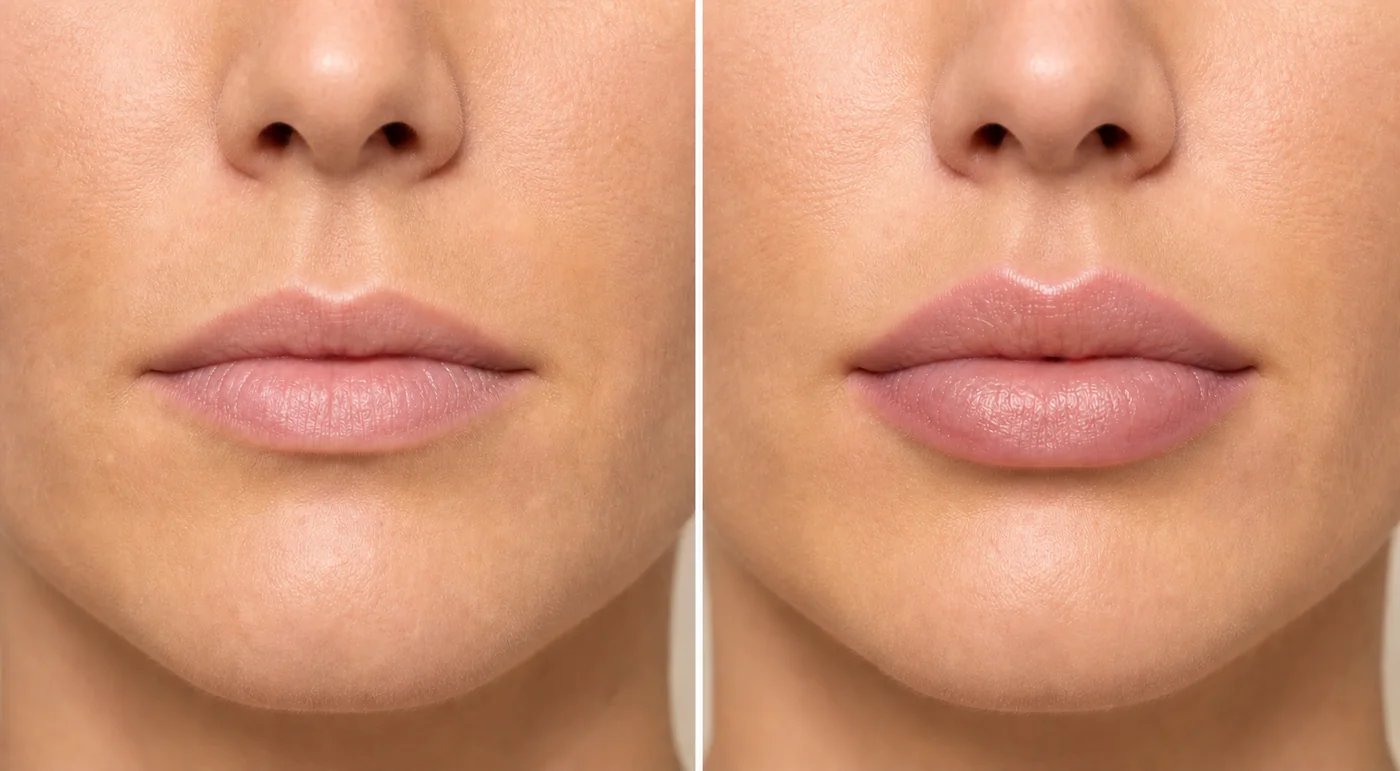
Lip enhancement is not one look
One patient may want a subtle restoration of a border that has softened over time. Another may want more visible volume. Someone else may be most concerned with asymmetry, proportion between the upper and lower lip, or the way the lips relate to the profile.
Those goals require different placement strategies. The same amount of filler can look very different depending on the product, tissue, technique, and starting anatomy. This is why choosing a plan by syringe count alone can be misleading.
Lip-only treatment versus facial balancing
A lip-only consultation focuses closely on the lips: shape, border, projection, hydration, asymmetry, and the relationship between the upper and lower lip. This may be exactly what is needed when the rest of the profile already feels balanced to the patient.
A facial-balancing consultation steps back. It considers how the lips relate to chin projection, lower-face proportions, cheek support, profile, and the transition between features. It does not mean every area needs treatment. It simply prevents the lips from being evaluated in isolation when another proportion is influencing the concern.
Why the recommended amount varies
There is no universal amount that creates a natural result. A responsible recommendation accounts for how much change the tissue can safely accommodate and how much change the patient wants to see.
- Starting lip volume, shape, symmetry, and tissue quality
- Desired change in border, projection, height, hydration, or fullness
- History of previous filler and whether product may already be present
- The selected filler’s characteristics and approved indication
- Whether the safest, most refined approach is one visit or a staged series
Why staged treatment can be more elegant
More filler is not automatically better, and less is not automatically more natural. The right amount is the amount that supports the agreed goal without asking the tissue to change beyond what is reasonable in one session.
Staging gives swelling time to resolve and allows both patient and provider to evaluate proportion before adding more. This can be especially helpful with very small lips, significant asymmetry, prior filler, or a larger desired transformation.
The risk conversation belongs in the consultation
Common effects include swelling, bruising, tenderness, firmness, and temporary unevenness. Infection, nodules, inflammatory reactions, and an unwanted result can occur. The most serious risk is unintended injection into a blood vessel, which can cause tissue loss, vision changes, stroke, or other permanent harm.
Increasing pain, pale or blotchy gray-blue skin, vision changes, facial weakness, confusion, or trouble speaking during or after filler treatment requires immediate medical evaluation. Product choice, injection plan, emergency readiness, and clear aftercare are part of safe treatment—not separate from the aesthetic result.